Overview
At Passion Clinics, we offer advanced scar treatment services using the latest surgical and non-surgical techniques to minimize the appearance of scars and improve skin texture and contour. Whether the scar is from a previous surgery, an accident, acne scar revision, or an old scar removal, our goal is to restore your skin's aesthetic appearance and your self-confidence. This service is part of our integrated programs, starting from accurate diagnosis through to post-procedure follow-up.
Why? (Purpose)
The primary goals of scar treatment sessions are:
- Reduce Scar Visibility: To minimize scar size, flatten their texture, and improve their color to better match the surrounding skin.
- Improve Skin Texture: To make the treated area smoother and more uniform.
- Boost Self-Confidence: To help patients feel comfortable and satisfied with their skin's appearance.
Benefits
- Long-lasting Results: Effective treatment of old scars with results that are sustained for a long period.
- Customized Treatments: A unique treatment plan tailored to the scar type (atrophic, hypertrophic, keloid) and location.
- Non-Surgical Procedures: Most of our scar treatments do not require surgery or extended downtime.
- Overall Skin Enhancement: Eliminating the marks of surgical procedures and acne scars, which rejuvenates your skin generally.
- Facial Scar Correction—achieving permanent reduction or significant minimization, restoring your facial radiance.
Candidates (Eligibility)
This service is ideal for anyone suffering from:
- Atrophic Scars: Scars that appear as depressions in the skin, such as acne scars.
- Hypertrophic Scars or Keloids: Raised, thick scars that may cause itching or pain.
- Post-Surgical Scars: Treatment for scars following surgical operations (post-surgical scar removal), such as a C-section, that cause discomfort or unease.
- Scars resulting from burns or other injuries.
- Facial scars that affect aesthetic appearance.
Procedure Steps
Scar removal at Passion Clinics is carried out according to a personalized treatment plan, which may include:
- Consultation and Assessment: A comprehensive examination of the scar and skin type, followed by the development of a treatment plan based on the diagnosis.
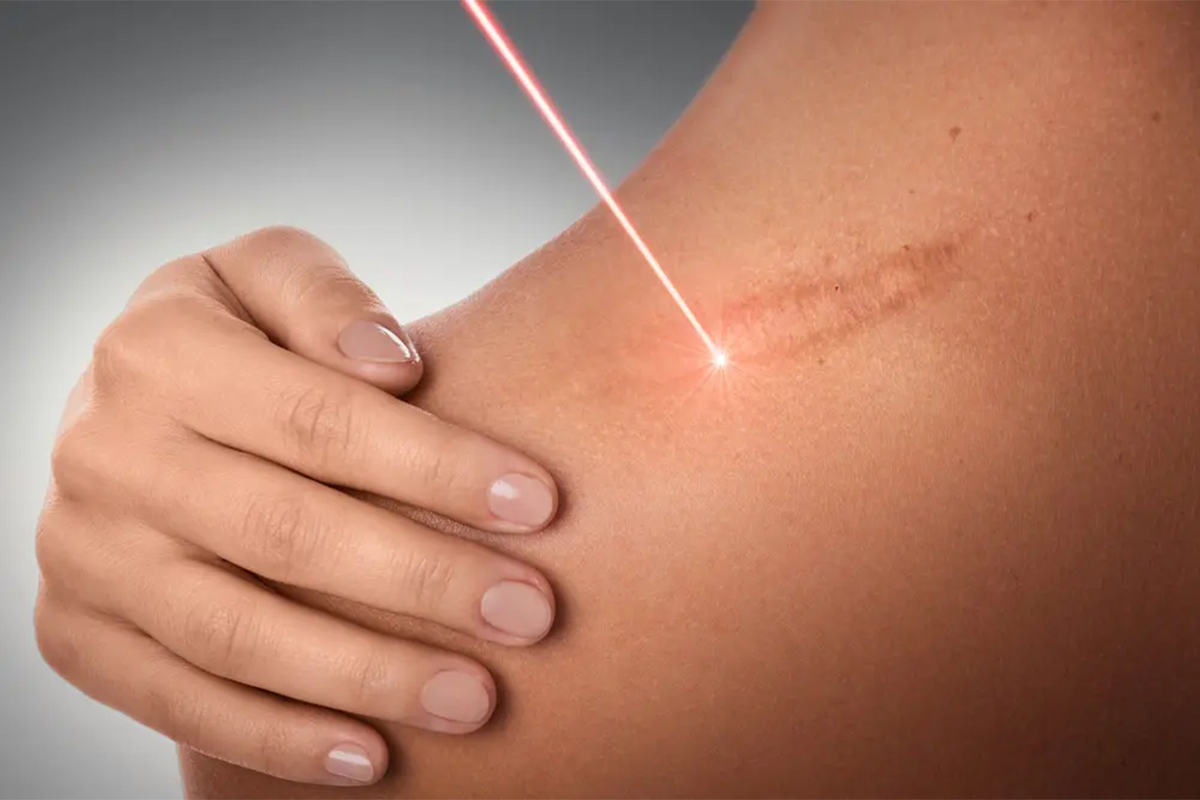
- Laser Sessions: Laser scar treatment is one of the most important techniques. We use advanced laser devices (such as Fractional CO2 or Fractional laser) that stimulate collagen and promote skin cell regeneration.
- Other Techniques: The treatment plan may include:
-
Chemical Peeling: To reduce pigmentation and improve skin texture.
-
Mesotherapy or PRP Injections: To stimulate cellular regeneration.
-
Microdermabrasion: To remove the skin's outermost layer.
-
Direct Injections: For hypertrophic or keloid scars, corticosteroid injections are administered to reduce volume.
-
- Follow-up: Periodic follow-up to evaluate progress and adjust the plan to achieve optimal results.
Postoperative Recovery
The recovery period varies depending on the technique used:
- After Fractional Laser: You may experience mild redness and swelling, which subsides within 3–7 days. Skin peeling may occur in the following days, a natural part of the healing process.
- After Injections: You may feel mild pain at the injection site or minor bruising.
- After Chemical Peel: Redness and skin peeling may occur, which typically subsides within a week.
Side Effects
The treatments used at Passion Clinics are highly safe, but some minor and temporary side effects may occur:
- Temporary redness and swelling.
- Mild sensitivity or itching in the treated area.
- Temporary change in skin color (lighter or darker) which gradually fades.
Why Choose Passion Clinics?
Why should you choose Passion Clinics for your scar treatment sessions?
- Specialized Expertise: Our professional medical team, trained in scar treatment, ensures the patient achieves the best results with complete safety.
- Advanced Technology: We use modern techniques and high-quality, fully sterilized tools to guarantee treatment precision and minimize downtime.
- Integrated Care: We provide a comprehensive consultation before scar treatment sessions to determine the patient's needs and design a perfectly tailored treatment plan.
- Safe & Comfortable Environment: We adhere to the highest standards of hygiene and sterilization to give our patients a comfortable and trustworthy experience.
Start your health and aesthetic journey now with Passion Clinics. Contact us today to book your consultation appointment.