Overview
At Passion Clinics, we provide professional Tattoo Removal services using advanced and safe technologies under the supervision of expert dermatologists. This service aims to diminish or erase permanent pigments applied to the skin—whether cosmetic tattoos or old decorative designs—while maintaining skin integrity and minimizing potential risks.
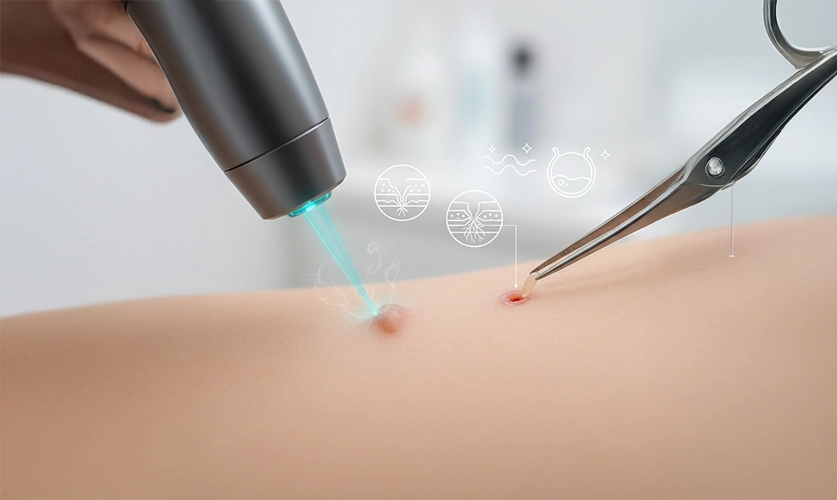
Our primary technique relies on Laser Tattoo Removal (specifically Q-Switched or Pico lasers in some cases). This technology breaks down ink particles within the skin, allowing the body’s immune system to gradually eliminate them. This method is currently considered the gold standard in the world of Permanent Ink Removal due to its perfect balance between efficacy and safety.
Why? (Purpose)
- Correcting Past Decisions: An individual may wish to remove a tattoo that no longer fits their lifestyle or reflects their current identity.
- Professional or Social Requirements: Certain careers or social occasions may require the skin to be free of visible tattoos.
- Fading or Alteration: Tattoos can change color over time, lines may blur, or unwanted shading may develop.
- Health or Skin Issues: Removal may be necessary if the tattoo causes persistent irritation or an immune reaction.
- Preparing for New Art: Some patients choose Multi-Session Laser Tattoo Fading to clear space for a new design or a "cover-up."
Benefits
- Effective Ink Clearance: These techniques gradually remove ink until the tattoo becomes invisible or nearly invisible.
- Skin Appearance Improvement: The skin restores its natural look once the ink is removed.
- Safe Technologies: When executed correctly, modern lasers clean the skin with minimal side effects.
- Renewed Canvas: In specific cases, a new tattoo can be applied to the same area once the skin has fully healed.
- Boosted Self-Confidence: Removing an unwanted element of one's appearance often leads to increased self-esteem.
Candidates (Eligibility)
Ideal candidates for Tattoo Removal include:
- Individuals in good general health with no active skin diseases or chronic conditions that impair wound healing.
- Those with no known allergies to tattoo inks or a history of adverse skin reactions in the area.
- Patients with realistic expectations, understanding that multiple sessions are required and some residual ink may remain.
- Women who are not currently pregnant or breastfeeding.
- Individuals with healthy skin surrounding the tattoo (no current ulcers or infections).
Temporary Contraindications:
- Large scars in the treatment area.
- Immune disorders or delayed wound healing.
- Use of medications that affect skin healing (e.g., blood thinners or corticosteroids).
- Very recent tattoos; it is essential to wait until the skin has fully healed from the initial tattooing process.
Procedure Steps
- Consultation & Assessment: The dermatologist examines the tattoo’s color, depth, and size. We review your medical history and set a preliminary plan for the number of sessions.
- Laser Selection: The doctor selects the appropriate laser wavelength based on the ink colors and your skin type.
- Patch Test: A small test is often performed to determine the skin’s reaction and calibrate the energy levels precisely.
- Anesthesia & Sterilization: The area is cleaned, and a topical numbing cream is applied to ensure comfort.
- Laser Pulses: The laser is directed at the tattoo, breaking down ink particles with each pulse.
- Soothing & Bandaging: Cold compresses are used to calm the skin, followed by a soothing ointment and a sterile bandage.
- Multi-Session Plan: Multi-Session Laser Tattoo Fading requires intervals of 4 to 8 weeks between treatments to allow the body to clear the ink fragments.
Postoperative Recovery
- Initial Hours: You may notice redness, slight swelling, and occasionally small blisters or crusting.
- Immediate Care: Apply cold compresses and anti-inflammatory ointments as prescribed. Avoid scrubbing the area.
- Sterilization: Keep the area clean when changing bandages.
- Sun Protection: Strictly avoid direct UV exposure and use a high-SPF sunscreen.
- Moisturization: Consistently hydrate the skin to support the healing process.
- Avoid Harsh Products: Refrain from using chemical irritants or harsh exfoliants on the treated zone.
Side effects
- Redness, swelling, and mild puffiness.
- Formation of small blisters or scabs.
- Temporary dryness or peeling.
- Temporary or permanent pigment changes (lightening or darkening), particularly in darker skin tones if the incorrect laser is used.
- Rare cases of scarring or infection if post-care instructions are not followed.
- "Paradoxical Darkening," where certain ink colors may initially appear darker after treatment.
Why Choose Passion Clinics?
- Expert Medical Supervision: Our professional team, trained in the latest Laser Tattoo Removal techniques, ensures safe and effective results.
- Advanced Technology: We utilize high-quality, sterilized tools to ensure precision and minimize downtime.
- Integrated Care: We offer comprehensive consultations to design a treatment plan tailored specifically to your skin and tattoo type.
- Safe & Comfortable Environment: We adhere to the highest hygiene standards for a reliable patient experience.
Start your skin restoration journey today with Passion Clinics. Contact us to book your consultation.
FAQs
How many sessions are needed for complete Permanent Ink Removal?
This depends on the size, color, and depth of the ink. Generally, it requires between 5 to 12 sessions, though some cases may vary.
Is the procedure painful?
Most patients describe the sensation as a "rubber band snap." We use topical anesthesia and cooling methods to make the experience as comfortable as possible.
Can a tattoo be removed entirely?
In most cases, the tattoo can be significantly removed. However, stubborn colors like green or yellow, or very deep ink, may leave faint shadows.
What are the risks of neglecting post-care?
Failure to follow instructions increases the risk of infection, permanent scarring, or unwanted pigmentation changes.
When can I get a new tattoo in the same area?
Once the skin has completely returned to its natural state, usually several months after the final session, a new design can be applied.